



News

Authored by
Displaying 301 - 310 of 415

Supporting the long-term economic vitality of Western Mass

May 4th, 2016 by

While the Greater Boston region has one of our nation’s strongest economies, the same cannot be said for the entire state. Unemployment is higher in Western Massachusetts and incomes are lower as the region struggles to adapt to the new economy. Thankfully, the Franklin County CDC has developed a flexible and customized array of services to support the long-term economic vitality of Western Mass by helping locally-owned businesses start, grow, and thrive. 

Each year, Franklin County CDC (FCCDC) works with over 300 entrepreneurs to help develop and grow their businesses, and they are continually expanding and adapting their programs to meet the needs of their region.  More than 20 years ago, they established the Venture Center in Greenfield as a small business incubator.  A few years later, the CDC established the Western Massachusetts Food Processing Center, which provides the facilities and equipment for culinary businesses to not only prepare their products, but also to package and prepare them for distribution.  More recently, thanks to funding from the Massachusetts Growth Capital Corporation, the CDC formed a regional partnership with MACDC Members, Valley CDC and Hilltown CDC, to provide small business technical assistance and lending to the broader region, from Northampton, to the Hilltowns, to the Northern Berkshires.  

And just this year, the CDC established the Pioneer Valley Grows Investment Fund to enable local residents to invest in local businesses.  So far, the CDC has raised $650,000 from dozens of local investors and those dollars have been reinvested in four local companies – with six more in the pipeline. 

The CDC also has a new program to help their clients reach new and larger markets. Expanding on the Western Massachusetts Food Processing Center’s work, FCCDC encouraged many local growers and processors to connect to the recently opened Boston Public Market. Eight Franklin County CDC-supported businesses now either have a booth or sell their goods through other vendors in the new market. They also hope to encourage more regional sales through the market, or develop a way to rotate in producers and collaboratively use the space.  Helping businesses in Western Massachusetts to access the Boston market will help lessen the economic inequities between the Eastern and Western parts of our Commonwealth.

Each year, the CDC strives to find new and creative ways to build their local economy.  It’s not easy, but, as John Waite, Franklin County CDC’s Executive Director says, “This is what we do.”

Check out the complete 2016 GOALs Report and past GOALs Reports


Helping Hundreds of low-income Students Achieve a Brighter Future

May 4th, 2016 by

Long before Kendall Square’s emergence as the center of the Biomedical Industry in Greater Boston, Just-A-Start (JAS) was an engine of its own. JAS’s Biomedical Careers Program has prepared 25-30 low-income students annually since 1992. With over 500 graduates placed in industry jobs and a 77% in-industry placement rate, JAS’s success has not gone unnoticed. In 2015, the Biomedical Careers Program received a $200K grant from J.P. Morgan Chase and JAS acquired new equipment for the program.

Even though the industry is filled with young people, most of JAS’s students are in their 30s, 40s, and 50s. Some found the program through Cambridge Housing Authority outreach and others are unemployed individuals with training vouchers. Many are immigrants, some have college degrees, and all of them make a commitment to participate in the program five hours a day, Monday through Friday, for nine months. They cover subjects like genetics, immunology, human anatomy, and chemistry, in addition to hearing from guest speakers and going on facility tours. For Sajan, after emigrating from Nepal in 2009, the program offered a way to build his skills and familiarity with the latest technology, so that he could get a job in a cancer research position. As a cancer survivor himself and former pharmaceuticals researcher in Nepal, Sajan says he is now much more optimistic about establishing a career here. 

According to Program Manager Felipe Gomez, it is not uncommon for students to emerge with a transformed sense of self. They are more confident and knowledgeable when it comes to their abilities in math and science. But more than that, Gomez remarks that students feel respected, empowered, and proud of their work. For Jennifer O’Donnell, one of the program’s teachers, the strength of the program lies in the connections that students make with each other, alums, staff, and industry leaders. O’Donnell knows that the family atmosphere JAS creates is one of the reasons the students feel ready to persevere despite the challenging curriculum. Students know that there is a place for them at JAS and in the industry.


A new housing voucher program in the works in Waltham

May 2nd, 2016 by

With rents rising and unspent funds set aside to help with housing, we knew we had to act,” says Daria Gere, Executive Director at Waltham Alliance to Create Housing (WATCH).  The city of Waltham passed its Community Preservation Act (CPA) in 2005.  In the past 10 years, between the local property tax surcharge and state distributions, Waltham’s CPA generated $30 million, at least 10% of which is for affordable housing. WATCH and its Tenant Action Group (TAG) decided it was time to organize to create the political will and pressure to spend CPA funds to help low-income tenants living in Waltham. 

TAG and WATCH wrote a proposal for a CPA-funded Tenant-Based Rental Voucher Program. With almost 6,000 households income-eligible for the voucher and 5% of the City’s residents living in overcrowded or substandard housing, the need in Waltham is pressing. Fueled by their own experiences, tenant leaders organized phone banks and a letter writing campaign. WATCH sent hundreds of letters to the Waltham City Council from residents, allies, and 15 organizations. On 3 different occasions, WATCH brought over 20 tenants and allies to testify to City Council.

One resident to testify was Getty, a mother of a 9-year-old child with special needs who wanted to help the City Council understand the difficult choices she faces. “I work 20 hours a day to support my son and myself. Right now, I am about to be homeless because I couldn’t find [a new] place to live,” she said, noting that she was unable to pay her rent after her roommate moved out. Because her son has special needs, she can’t move to another town and put him in a new school environment. Other residents, like Getty, also shared their stories.  And the City Council listened. 

On January 26th, 2016, the City Council passed the CPA Voucher program. Upon approval of the contract between the City and the Waltham Housing Authority, Waltham will provide a 3-year rental voucher to 50 of the City’s lowest income households. The voucher will ensure that tenants’ rents are only 30% of their income. While more permanent low-income housing options are needed, this was a huge step forward that only happened because of the community organizing efforts of WATCH, and the residents of Waltham.

Check out the complete 2016 GOALs Report and past GOALs Reports


ED as 'Heroic Martyr' Hinders Nonprofit Leadership Succession

April 27th, 2016 by Peter Lowy

The nonprofit executive director as "heroic martyr"—committed, overworked, trying to do ever more with the same or shrinking resources—doesn't serve the organization and may dissuade new generations of potential leaders from taking over, attendees at a panel discussion in Boston were told earlier this week.

Articulating the sentiment was Hez Norton, director of partnership and leadership initiatives at Third Sector New England (TSNE), speaking on "The Future of Nonprofit Leadership" at Boston University's Questrom School of Business, who presented key findings from a TSNE nonprofit leadership survey completed last year.

Other panelists, as well as many among the 50 attendees, agreed with Norton.

Said Danny LeBlanc, chief executive officer of the Somerville Community Corporation for the last 15 years, "We role model things I wouldn't want to emulate if I were 30."

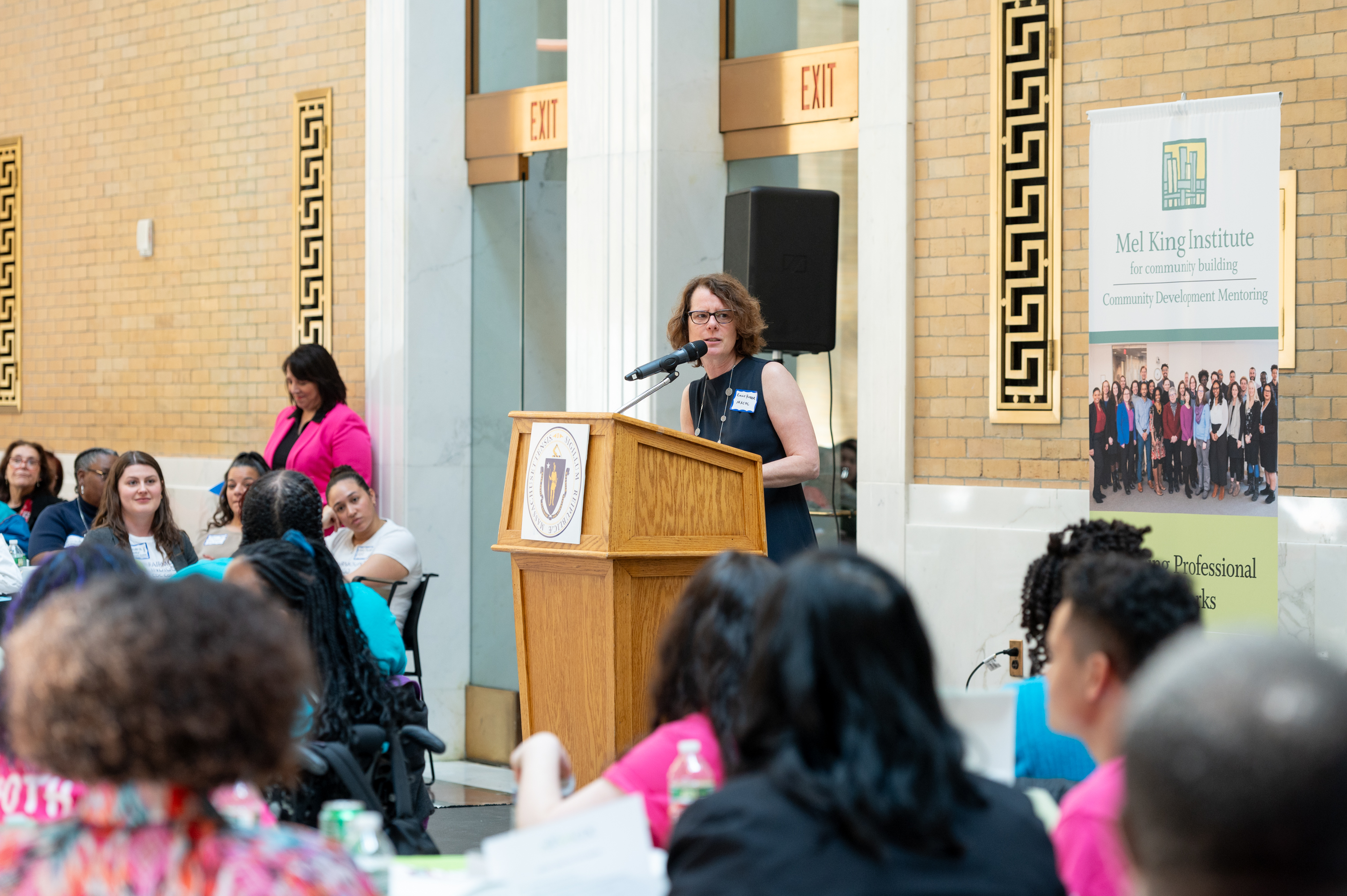
Shirronda Almeida, director of the Mel King Institute for Community Building in Boston, concurred, observing that because Millennials, those born from 1982 through 2002, are looking to make an impact and less interested in functioning within traditional organizational hierarchies, current nonprofit leaders need to reduce stress from the top job and focus more on what type of organization they want to leave behind.

While the event was organized to stimulate discussion on a key survey finding—that 64% of nonprofit leaders across New England, and 78% in Boston, said they intend to retire within five years—panelists acknowledged that numerous regional and national surveys for at least the past 15 years have developed similar projections, which have yet to materialize.

Jennifer Aronson, senior director of program and nonprofit effectiveness at The Boston Foundation, said nonprofits have not yet seen a massive leadership turnover, because many Baby Boomer nonprofit leaders are not ready to retire. 

"They feel they're on the side of good and push themselves," she said, which results in leaders protecting the organization as it is today instead of thinking about the best way to make an organizational impact. She added, "We say we can do more with less, but that's not realistic."

One possible response, Aronson suggested, is for nonprofits to practice leadership sharing, which helps more people within the organization more fully understanding how it functions.

Another response is for nonprofits to learn to say "no" to funders who underfund projects. 

"Nonprofits need to be realistic regarding what it costs to do programs, and reject funding if it is not enough," said Norton, himself a former nonprofit executive director who changed the direction of his career because "the work takes its toll."

Key findings from the TSNE Leadership New England report included the following:

  • 58% of nonprofit leaders and 62% of nonprofit board members said their organizations do not have any type of succession plan in place. 
     
  • Two-thirds of leaders (64%) and half of board members (52%) said they do not believe there is someone on the staff who could succeed the executive.
     
  • One-third (32%) of all leader and board respondents said they believe there is enough “bench strength” in their organizations, that is, “people who can step into leadership/management roles if and when needed.”
     
  • 35% of Massachusetts nonprofit leaders said it is essential to have support for developing succession plans, and slightly more (37%) said it is essential to provide funds for developing professional staff.
     
  • 60% of Massachusetts nonprofit leaders earn $99,000 per year or less.

Republished from www.massnonprofit.org


A Sign of North Shore Housing Discrimination

April 20th, 2016 by Rosa Ordaz

We have had a lot going here at HCP lately.

We are working every day to provide good, safe, and affordable housing all around the North Shore.

This is housing for retired, fixed income seniors, people with disabilities, and working families.

This is housing that, as a community, as a county, and as a state, we need more of and in varying forms.

Currently, HCP is working through a court process for a Wenham project (Maple Woods), as we passionately defend our permit to build 60 affordable senior units. The legal process is hard, expensive, and time consuming. While we pour ourselves into this struggle, the human and financial resources expended preclude us from working in other ways and in other communities to help people who need it.

HCP is also looking into and contemplating new housing in Hamilton, Beverly, and Rockport. There will be much more on these potential projects in the near future. This is not easy.  The hurdles are difficult to navigate, be they complicated financial structures, addressing environmental concerns, being strategic in planning for human needs into the coming decades, and more. But the most distressing hurdle is the one which became very evident on busy Route 1A, as we begin to explore a new project.  This discriminatory and erroneous sign, in reference to a potential mixed use family and elder development, is the hurdle which most saddens us, gives us pause, but ultimately, strengthens our resolve.

In the midst of myriad meetings, late nights, emails, phone conversations, and too many cups of coffee, I was profoundly struck by two things, which not just gave me pause, but stopped me in my tracks.
1.One, a plea for help. We received an email last week from a family. Essentially, the email stated….We have children. We work full time at a local health care facility. We are in a local homeless shelter. We have first and last months rent. We can move in anytime……While we receive these emails daily, this one came in the midst of our preparation for court regarding Maple Woods. The email came in as we think about and talk with other communities about what it will cost to pursue unit creation for this working family and too many others who reach out to us. But most poignantly, It came just before this afore mentioned sign was erected.
2.The next moment came as I told my seven year old daughter about the email from the family. It was told in part to explain to my child where dad had been all week and why. Her response was, without hesitation, “Dad….they could live with us!”

I was trying to teach her something…my daughter. Instead she is teaching all the rest of us.   “Dad…they could live with us…..”

So how about it North Shore? Can they live with us? Can teachers, firefighters, nurses, retirees, carpenters, office staff, and others live with us?

If we want them to live with us, then we all need to stand up and say so.

Good people of good will need to use their voices in each community on the North Shore and say that it is good and right and responsible for us to make housing available across the region for our elders, our disabled neighbors, our children, our employees and those upon whose services we depend.

So how about it? What are you going to do about it now that it is on your mind? Please do something. It’s time to do something. Do what you can do to help make this happen.

You can do it.

~ Andrew


2016 Annual Small Business Technical Assistance Grantee Meeting

April 13th, 2016 by Joe Kriesberg

On March 11th the Massachusetts Growth Capital Corporation held its annual Small Business Technical Assistance Grantee Mid-year meeting at Babson College in Wellesley, MA.  MACDC President Joe Kriesberg, a board member of MGCC, attended the event along with more than a dozen MACDC member organizations that participate in the technical assistance program.

“The attendees represented the “best of the best” of small business assistance providers from across the Commonwealth and it is a privilege to have MGCC partnering with their efforts” said Larry Andrews, President and CEO of MGCC.

Mr. Kriesberg was there to talk to the grantees and participants about MACDC's current legislative advocacy efforts to retain funding for the program in the FY 2017 state budget.  He noted that Governor Baker is supporting the program and we have strong allies in the House and Senate. At the same time, he urged everyone to contact their legislators to ensure continued funding.

The meeting also provided an opportunity for small business support organizations to network, share best practices and hear from organizations that can help strengthen their programs.  Claudia Green, Executive Director of English for New Bostonians, shared an informative and inspiring presentation on the resources available for English as Second Language (ESL) and English for Speakers of Other Languages (ESOL) startups and entrepreneurs.  NewVue Communities Director of Small Business Assistance, Ray Belanger, talked about how their organization methodically and strategically expanded its program to serve the entire North Central Mass region.  Finally, the Lawyers’ Committee for Civil Rights and Economic Justice and the Conservation Law Foundation provided information on how they can provide businesses with free  legal resources.  

MGCC's Small Business Technical Assistance Grant program is designed to complement and enhance the traditional public and private small business assistance network by providing technical assistance or training programs for underserved and disadvantaged businesses with 20 employees or fewer.  The grant recipients, which are selected in a competitive process, include community development corporations, micro-lenders and chambers of commerce. MGCC awarded grants to 30 organizations across the Commonwealth in Fiscal Year 2016.


The Importance of Preserving our History and Developing Affordable Housing

March 23rd, 2016 by Rosa Nin

Tuesday March 1st was an exciting day in Chelsea. The Neighborhood Developers (TND) hosted a ribbon cutting for their latest project, Lewis Latimer Place. The energy efficient project will house young at-risk parents and also provide support services through TND’s partnership with ROCA. The four sun-filled new homes were awaiting only the ceremony’s conclusion to receive the new families.  But they weren’t the only families benefiting from this project.

While walking through each new home, I envisioned all the hours invested into the development.  Many people took on this project not only to provide young at-risk families with quality housing, but also to recognize the contributions made to society by Lewis Latimer.  Historical sleuths Leo and Ron Robinson were on hand to recount their efforts to revive Mr. Latimer’s story, which starts with his parents, who were runaway slaves, settling in Chelsea.  The Neighborhood Developers installed a plaque commemorating his birth on the very grounds of these new homes, and will help to further legitimize the Robinson’s campaign to establish Lewis Latimer’s legacy as a scientist, poet, engineer, inventor and resident of Chelsea .

At the end of the day, when it was my turn  to pick up my kids  and go home they spotted the small flashlight I received from the event with “Lewis Latimer Place” emblazoned on it (Mr. Latimer helped invent some of the technology that is now used in lightbulbs).  They asked me what it was and why I had it.  Attending the ribbon cutting provided me a chance to talk to my children about slavery, determination and the importance of recognizing heroes from our past that may have been overlooked.  In simple terms, I spoke to them about freedom, and about Latimer’s work drawing up the first phone to which my seven-year-old daughter suggested “he should keep the phone and download games on it”.

Congratulations to The Neighborhood Developers for building housing for our community’s more vulnerable and thank you for helping preserve our nation’s history.


Community Investment Tax Credit: Big Impact for Valley CDC

March 23rd, 2016 by Alexis Breiteneicher

As a small CDC operating for almost 30 years in the Western part of the Commonwealth Valley CDC has often struggled with maintaining our community development capacity even while the Board and staff have worked hard over the years to diversify our funding streams.

In 2014, the Commonwealth rolled out the Community Investment Tax Credit (CITC) Program awarding $3 million in credits to 38 participating organizations from across the Commonwealth.   Valley CDC was able to raise approximately 87% of its goal that first year.  In 2015, the Commonwealth doubled our award and we raised 150% more in 2015 than 2014.  While this is not all new money (it includes existing donors who increased their giving level), it has made a significant impact on the work that Valley CDC undertakes.

Valley CDC was successful in utilizing all of its 2015 credits as well as the remaining 2014 credits raising a total of $213,672.  At the end of December, Valley CDC also had to direct investors to make donations to United Way of Massachusetts Bay and Merrimack Valley and designate Valley as the recipient because we had no remaining local credits.

Increasing capacity is vital to ensuring that underserved populations in our service area have access to all levels of homeownership assistance, small business assistance as many people seek self-employment, and affordable housing both for families and individuals, including homes for individuals/families experiencing homelessness.

The success and impact of our 2015 CITC campaign has increased our cash on hand which helps to eliminate stress on the day-to-day operation of the agency. Additionally, Valley CDC is now in the position to recruit a real estate project manager this spring, which will allow Valley CDC to increase its housing development capacity.

Valley has a great track record in the development of affordable housing, and had lost its long-term housing project manager as a result of the financial crisis of the last few years as many agencies struggled financially.  It has been almost four years that the executive director has been primarily responsible for housing development activities.  We successfully completed our 38-unit family development – Parsons Village in Easthampton – in August and all families were in their new homes by mid-October.  Valley is now poised to get funded for its redevelopment of the Northampton Lumber Yard into 55 units of family housing in downtown Northampton.  The addition of a real estate project manager is critical to Valley’s continued success as a nonprofit housing developer.

The success of Valley CDC’s CITC campaign has also allowed us to utilize a highly skilled consultant to bring us through a robust strategic alliance and strategic planning process that includes a commitment both to expanded community engagement activities and a real focus on diversity and inclusion.  Our upcoming Board/staff/committee retreat will focus exclusively on diversity and inclusion.

The legislature and the Commonwealth are already seeing the results that the community development field projected would come of this generous tax credit as MACDC aggregates data from the CITC participants.  It is truly making an impact on the lives of low- and moderate-income people and other underserved populations in Hampshire County.


Creating Mixed Income Housing

March 15th, 2016 by Joe Kriesberg & Don Bianchi

Building an affordable housing strategy that is responsive to community needs and market driven

As we begin a new year, MACDC plans to be working on a wide cross section of housing issues. Our goal is to create an affordable housing system that is better able to meet the diverse needs of our residents and communities. This will require both more money and more flexibility. In a series of articles to be published in early 2016, MACDC is articulating some its thoughts about how we do this. The first article talked about how we can grow the resource pie – the first and most essential step to meeting growing demand for affordable housing. In the second article, we talked about how to lower operating costs so that we can use our limited subsidies more efficiently. In the third article, we talked about how to deploy our resources in a more balanced way that enables us to better respond to local market contexts and to community driven priorities.  Our fourth and final article discusses how we can create affordable housing that can serve a broader range of income levels.

Article #4: Creating Mixed Income Housing

A growing number of stakeholders in the housing field – community developers, fair housing advocates, local residents, elected officials and urban planners – support mixed-income housing.  Governor Baker and Mayor Walsh make this argument virtually every time they talk about our housing challenges.  They and many others agree that mixed-income housing is the best way to expand housing opportunities for low- and moderate-income households without concentrating poverty.  Mixed-income housing is especially critical in expensive places, like Greater Boston, where even those with moderate incomes struggle to find housing that they can afford.  In weaker markets, like some of our Gateway Cities, mixed income housing can help revitalize a neighborhood and create more racial and economic integration.  At the same time, some advocates, including some of our members, struggle to reconcile providing subsidies to moderate income people when so many lower income families are still struggling, especially when the term “moderate income” is sometimes defined to be as high as $125,000 per year or more for certain households.  

Notwithstanding these on-going debates, we believe that the affordable housing industry needs to produce mixed income housing – not just in one building, but comprehensively.  The state recently approved funding for over 1,100 affordable housing units and the vast majority of them are priced for people whose incomes range from 50-60% of Area Median Income (AMI) – a fairly narrow income band that excludes many families below and above that range who still need help.  The Low Income Housing Tax Credit (LIHTC) program, which finances almost all new affordable rental housing, does nothing to help moderate income households making between approximately $55,000 and $80,000 – a growing contingent of families who can’t afford our rising housing costs. And while some families earning less than 50% of AMI can afford to rent LIHTC units by paying more than 30% of their income for rent, LIHTC housing cannot help families facing or at risk of homelessness without the use of an additional subsidy source – namely rental assistance from either the state’s MRVP Program or the federal Housing Choice Voucher programs.  In fact, research (PDF) shows that a very large percentage of LIHTC units are now occupied by voucher holders – an inefficient use of subsidy made inevitable due to structural problems in both the LIHTC program (narrow income targeting) and Section 8 (rent limits that are too low for many units in the private market).  

In the short term, to achieve the goal of providing affordable housing across a broader range of incomes than the tax credit program currently allows, we will need to continue using rental subsidies for lower income households.  At the same time, the state needs to identify new resources that can be used in combination with tax credits to subsidize “moderate income” units for households earning between 61% AMI to 100% AMI, or up to about $95,000 for a 4-person household in Greater Boston.  These new “moderate income” subsidies,  should not be taken from resources currently aimed at lower income households and  should be smaller than what we are providing to lower income units (the higher rents should make that possible).  However, the bottom line is that without some financial support for this moderate tier, mixed-income housing will remain very difficult to produce, except in the strongest rental markets.  And in those strong markets, there would be a significant gap between the tax credit rents and the market rents, leaving middle income households unserved yet again.

In the long term, we need to reform the LIHTC program to allow developers/owners to offer a range of rents.  A number of organizations, including HUD and the National Low Income Housing Coalition (NLIHC), have recommended a specific way to achieve this goal:  allow LIHTC projects to serve a range of incomes, so long as the “average” is 60% AMI.  This would allow, for example, a 30 unit project to have 10 units priced at 40%, 60% and 80% of AMI respectively.  The developer receives the same total rent revenue, but a broader range of families could afford to live there.  While enacting such a change will be hard given the dysfunction in Congress, we need to keep pushing, so that we can strike when the opportunity arises.  In the meantime, we might consider experimenting with this model with the Commonwealth’s low income housing credit.

Creating mixed income housing will require new dollars and new creativity. We are confident that the housing sector can bring the creativity – we will need the public sector to bring new and more flexible dollars.


Creating a More Balanced and Community Driven Affordable Housing System

February 29th, 2016 by Joe Kriesberg & Don Bianchi

Building an affordable housing strategy that is responsive to community needs and market driven

As we begin a new year, MACDC plans to be working on a wide cross section of housing issues. Our goal is to create an affordable housing system that is better able to meet the diverse needs of our residents and communities. This will require both more money and more flexibility. In a series of articles to be published in early 2016, MACDC is articulating some its thoughts about how we do this. The first article talked about how we can grow the resource pie – the first and most essential step to meeting growing demand for affordable housing. In the second article, we talked about how to lower operating costs so that we can use our limited subsidies more efficiently. In this article, we talk about how to deploy our resources in a more balanced way that enables us to better respond to local market contexts and to community driven priorities.  Our fourth article will address how to create affordable housing that can serve a broader range of income levels.

Article #3: Creating a More Balanced and Community Driven Affordable Housing System

Every community requires a diverse array of housing to meet the needs of its current and future residents.  Neighborhoods must have housing at a variety of price points, as well as rental and homeownership opportunities, housing for seniors, families and young adults, and large and small multi-family buildings, along perhaps with some single family homes and two or three-family homes. And we must build new housing, while maintaining and preserving the homes we already have developed.  These incredible housing pressures are further compounded by the constant shortage of funds required to meet the needs of each neighborhood and town in the Commonwealth.  (See the first article in this series to learn about our efforts to correct that shortage).

At present, well over 90% of our affordable housing dollars are used either to preserve our existing affordable housing or to produce new rental housing through the low income housing tax credit program (LIHTC).  The LIHTC program is fairly flexible – allowing developers to work with local stakeholders to meet local demands, but tax credits have their limitations.  LIHTC projects offer rents designed to serve a narrow income band, generally between 50 and 60 percent of the Area Median Income (AMI). Families that earn slightly more are ineligible and families that earn less can only afford the rents by paying over 30% of their income or by using a rental subsidy.  To be sure, many lower-income households do use rental subsidies, so they can live in tax credit properties, and this further underscores the limitation of the tax credit program’s design.  Moreover, LIHTC projects tend to be 25-50 units in size, or larger, and of course they only offer rental housing opportunities.  In recent years, due to rising construction and operating costs, an increasing percentage of the state’s housing bond resources are now being used to fill financing gaps in LIHTC projects, leaving less and less for other housing priorities.

The LIHTC program will remain at the core of the affordable housing sector for the foreseeable future.  It is a proven tool for producing high quality, well designed affordable rental housing.  In our next article in this series will talk about ways to improve the LIHTC so it can help produce rental housing for a broader range of incomes. In the meantime, MACDC, is advocating for new programs that will complement the tax credit, and enable the affordable housing field to be more responsive to local needs, desires and markets. These programs are very much in line with the Baker Administration’s stated approach of designing state programs in response to local needs and opportunities.

MACDC is advocating for the following:

  1. Community Scale Housing Program – We are very pleased that the Baker Administration has embraced our recommendation to create a new Community Scale Housing Program that will provide funding for smaller rental projects between 6 and 20 units in size. Such projects are too small to use the LIHTC program, and, therefore, have become very difficult to finance, even though they offer many benefits.  These projects are often a better fit in urban, suburban and rural communities and can be easier and faster to build with fewer transaction costs.   They also can be developed at lower total costs – sometimes as much as $50,000 to $100,000 less per unit than larger, more complex rental projects.  We hope to see a new program launched in the coming months.
  2. Acquisition/Rehab Program:  During the foreclosure crisis, the state partnered with the Massachusetts Housing Investment Corporation to use federal Neighborhood Stabilization Program money to provide funds to nonprofit and for-profit developers to acquire foreclosed properties, renovate them and put them back on the market. The program was very successful, but ran out of money when the Federal Stimulus funds were depleted.  Massachusetts still has many vacant or dilapidated properties that could benefit from such a program. We need to re-allocate some of our existing resources (and create new resources) to support such projects, so we can revitalize housing markets in our Gateway Cities and other weaker markets that are still struggling to recover from the foreclosure crisis.  These projects often can be completed at a lower cost than new construction and they have the added benefit of eliminating or rehabilitating blighted properties.
  3. Housing Rehab:  For many years, CDCs, cities and others have operated housing rehab programs that provide zero or low interest loans to homeowners, so they can fix up their properties; in 2014, CDCs improved 380 units.  These programs can advance many important policy objectives: housing code compliance, improved energy efficiency, lead paint abatement, blight reduction, and allowing seniors to age in place. Federal cuts to the Community Development Block Grant (CDBG) Program and the HOME Program – and the prioritization of other housing needs – have prevented the increase in funding necessary to address the growing needs of an aging housing stock and an aging population. MACDC believes these programs are vital to our neighborhoods and communities and should be given greater priority.  One immediate focus for MACDC is to reinvigorate the Get the Lead Out Program that provides deferred loan payments to income-eligible homeowners that want to de-lead their homes. The program used to make 200+ loans per year, but in recent years that number has fallen to less than 40 loans per year. We are working with MassHousing and the Department of Housing and Community Development (DHCD) to review program guidelines, assess administrative challenges and ensure funding levels, so that this program can effectively address the ongoing scourge of childhood lead poisoning.
  4. Slowing displacement in hot markets: Three of our members are experimenting with programs to buy properties in strong markets as a way to slow displacement and gentrification and to ensure some homes remain affordable to families and working people.  Allston Brighton CDC, Somerville CC and Metro West Community Developers are each developing different models tailored to its local market for acquiring existing housing stock and removing it from the speculative market.  We need to be open to creative ways to buy affordability in existing properties at a wide range of price points. In short, we need to encourage this sort of innovation and support expansion if particular models prove viable. 
  5. Homeownership Development – Throughout the recession, DHCD did not fund homeownership development due to the weak homeownership market and the need to prioritize rental housing. In 2014, DHCD re-opened its “homeownership round” for the first time in many years and approved five projects.  DHCD is currently evaluating the progress on those projects before deciding whether and how to move forward.  While rental housing should always be the priority, it is certainly appropriate to spend 5 to 10 percent of our resources on homeownership projects that can help achieve one of two core policy goals.  First, homeownership is key to stabilizing and strengthening housing markets in neighborhoods with low homeownership rates.  In these neighborhoods, homeownership programs can put blighted properties back on the tax rolls and increase economic diversity at a lower per-unit subsidy level than rental housing.  Second, homeownership programs can open up access to otherwise exclusive communities where working people are priced out. The significant racial disparities in mortgage lending recently documented by the Massachusetts Community & Banking Council reinforce the need for new affordable homeownership development.

Housing advocates are generally able to unify around campaigns to increase funding for affordable housing. It is understandably much harder to build unity when it comes to allocating scarce resources across many important priorities.  We cannot avoid these tough questions and conversations.  Choices must be made.  As community developers who pride ourselves on engaging and empowering local residents, we need to make sure those choices reflect what we hear from community leaders about what our neighborhoods need to thrive.  Ultimately, a balanced and community-driven housing agenda requires a diverse set of tools and programs to be successful.


Pages

Subscribe to News